A practical collection for creators, educators, and teams

Explainer Video Script Examples & Templates

Need a clear starting point for an explainer video? This collection brings together five examples spanning science, food safety, trade, history, and technology, with video samples and concise notes on what each one explains. Use them to study how a topic can be focused, sequenced, and matched to an audience before drafting your own script. For a useful starting framework, review these explainer video script examples and adapt the structure to your subject.

Create a video Browse the examples below, then shape your own concept.

Featured video

See a visual storytelling workflow in action

Watch the featured product video, then explore the explainer examples and use cases further down the page.

Start with the structure

What is an explainer video script?

An explainer video script is a concise plan for communicating a topic through spoken words and visuals. It typically identifies the central question or problem, introduces the information needed to understand it, and closes with a clear takeaway. The examples here use different approaches: a simple scientific cause-and-effect explanation, a character-led learning story, a practical checklist, and a technical overview.

A script is more useful when it is written for a particular viewer and a defined runtime. A short video about oil and water, for example, can focus on one reason the substances separate; a longer technical explainer can introduce a device, explain its features, and describe potential applications. These script template ideas can help turn a broad subject into a sequence that is easier to follow.

A simple outline to adapt

  1. 1. Introduce the question or situation.
  2. 2. Explain the essential idea in order.
  3. 3. Use an example, demonstration, or story.
  4. 4. End with the takeaway or next step.
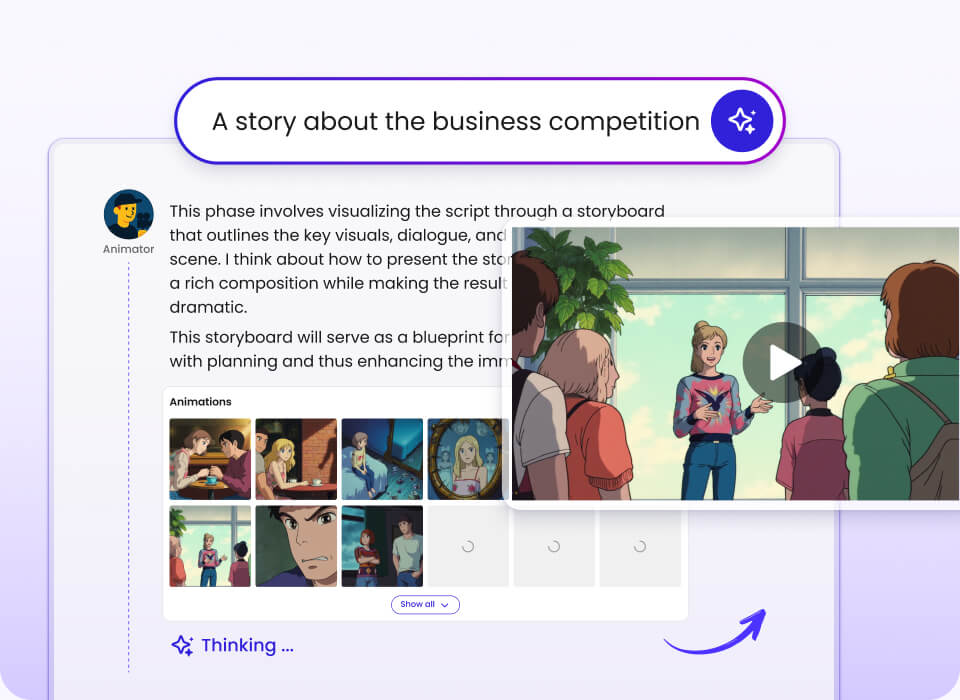
Illustrated video workspace with a presenter and storyboard thumbnails

A visual outline can help organize the story alongside scene ideas. Keep the script focused on the viewer’s question, and let each scene support the explanation.

Editor’s selection

Top Picks (Fast List)

These five examples were selected from the supplied collection to show a range of subjects, storytelling approaches, and runtimes. The ranking is an editorial guide to variety and clarity in the descriptions, not a claim that one video is objectively best for every project.

  1. #1 — The Science of Oil and Water Separation — Best for a concise, single-concept science explainer.
  2. #2 — How Mr. George Learned About Bacterial Resistance — Best for explaining a health topic through a story.
  3. #3 — Understanding Delivered Duty Paid (DDP) in Trade — Best for clarifying responsibilities in a business process.
  4. #4 — Wright Brothers’ First Powered Flight — Best for a short historical narrative built around key facts.
  5. #5 — STM32U3: Revolución en IA y Energía Autónoma — Best for a more detailed technical overview.

Comparison Table (All Picks)

Use the topic, stated runtime, and explanation style to find a useful reference. Runtime is the duration listed in the source collection.

Name Key strengths Key limitations Best for Why it stands out Runtime
Oil and Water Separation One question, one central explanation Source description focuses on one concept Short science content A concise example of cause and effect 22 sec
Bacterial Resistance Farm-to-home story and practical advice The supplied summary is not a full transcript Health and food-safety education Connects a mechanism with everyday actions 75 sec
Delivered Duty Paid (DDP) Defines roles, costs, and responsibilities Covers one trade term rather than all Incoterms Business and logistics explainers Makes a specialized term more concrete 143 sec
Wright Brothers’ First Powered Flight Specific date and flight duration anchor the story Centers on one historical event Short history videos Turns a milestone into a compact narrative 86 sec
STM32U3 Names specifications and application areas Uses specialist embedded-systems terminology Technical and product education Includes concrete figures: 640 KB RAM and 2 MB Flash 225 sec

How We Evaluated These Examples

The descriptions in the collection are the basis for this selection. We compared the stated subject, format, duration, and level of detail rather than treating the examples as interchangeable scripts.

  • Clarity — Does the supplied description identify the central idea and explain what the video covers?
  • Format variety — Does the selection show more than one approach, such as a story, process explanation, or technical overview?
  • Specificity — Are concrete details, steps, dates, or measurements provided in the source description?
  • Runtime context — Is the listed video duration useful for comparing concise and more involved topics?
  • Source transparency — Are the video and thumbnail tied to a provided public example?

The 5 Best Explainer Video Script Examples

Each entry pairs the original video with a short explanation of its structure and what you can study when planning a related video. These are examples to learn from, not word-for-word script downloads.

#1 The Science of Oil and Water Separation — Best for a concise science explainer

What it is / Why it stands out

This 22-second science explainer answers one familiar question: why oil and water do not mix. Its supplied description stays close to a single explanation about how water and oil molecules interact, making it a compact model for a focused science explainer script.

Best for

  • A short video built around one clear science question.
  • Showing a topic through a simple cause-and-effect explanation.

Key characteristics

  • • Science and education subject.
  • • Listed runtime: 22 seconds.
  • • Explains why oil and water do not mix.
  • • Contrasts water molecules bonding with one another and oil not bonding with water.
  • • Notes that oil floats on top.
  • • Includes a public video and thumbnail in the source data.

Pros / Why We Love It

  • The core question is immediately understandable.
  • The short duration suits a single-concept format.
  • The description states the main explanatory idea directly.

Cons

  • The supplied description covers one narrow concept, not a broader chemistry lesson.
  • A full transcript or scene-by-scene script is not included in the source data.

Media

Verdict: Choose this as a reference when your explainer needs to answer one science question with a compact, direct explanation.
#2 How Mr. George Learned About Bacterial Resistance — Best for a story-led health explainer

What it is / Why it stands out

This 75-second example follows a farm-to-home story to explain how resistant bacteria can survive medication, spread through food, and cause illness. It then closes with practical advice, offering a useful reference for creators planning health and food-safety video scripts.

Best for

  • Health or safety topics that benefit from a character and a sequence of events.
  • Explainers that pair a problem with practical steps.

Key characteristics

  • • Listed runtime: 75 seconds.
  • • Uses a farm-to-home storyline.
  • • Explains resistant bacteria surviving medication.
  • • Connects spread through food with possible illness.
  • • Recommends handwashing and proper cooking.
  • • Advises taking antibiotics only as prescribed.

Pros / Why We Love It

  • A story provides a route through a complex topic.
  • The description connects the mechanism to everyday context.
  • The ending includes concrete safety advice.

Cons

  • The supplied description does not include the full dialogue or scene breakdown.
  • The example focuses on bacterial resistance in a food-related context.

Media

Verdict: Use this example as a model for explaining a health-related process through a story followed by practical guidance.

#3 Understanding Delivered Duty Paid (DDP) in Trade — Best for a business-process explainer

What it is / Why it stands out

This 143-second explainer defines Delivered Duty Paid and describes the seller’s responsibilities for shipping, customs clearance, duties, taxes, and delivery. It also explains the buyer’s role, giving specialized trade language a clear buyer-and-seller frame. It can help inform business explainer scripts about roles and responsibilities.

Best for

  • Explaining a specific commercial term or process.
  • Clarifying which responsibilities belong to different parties.

Key characteristics

  • • Listed runtime: 143 seconds.
  • • Defines the DDP trade term.
  • • Covers shipping and export and import clearance.
  • • Includes duties, taxes, and transport through delivery.
  • • Describes the simplified buyer role.
  • • Notes sellers’ regulatory responsibilities.

Pros / Why We Love It

  • It focuses on one defined term rather than an entire field.
  • It distinguishes the responsibilities of seller and buyer.
  • Its description names several specific components of the process.

Cons

  • The example explains DDP, not every Incoterm.
  • The supplied summary is not a complete legal or trade reference.

Media

Verdict: Pick this example when your subject is a business process that becomes clearer by separating each party’s responsibilities.

#4 Wright Brothers’ First Powered Flight — Best for a short historical narrative

What it is / Why it stands out

This 86-second historical explainer centers on the Wright brothers’ first powered flight at Kitty Hawk on December 17, 1903. The source description gives the flight’s 12-second duration and frames it as evidence that powered human flight was possible, providing specific anchors for historical explainer storytelling.

Best for

  • A short video about one person, event, or milestone.
  • Historical scripts that can be organized around dates and outcomes.

Key characteristics

  • • Listed runtime: 86 seconds.
  • • Focuses on Orville and Wilbur Wright.
  • • Names Kitty Hawk as the location.
  • • Gives the date: December 17, 1903.
  • • States that the flight lasted 12 seconds.
  • • Connects the event with the possibility of powered flight.

Pros / Why We Love It

  • Specific dates and duration give the narrative concrete reference points.
  • The description identifies a clear historical turning point.
  • The topic is focused on one event.

Cons

  • The supplied description centers on the first flight rather than a full biography of the brothers.
  • A complete narration script is not provided in the source data.

Media

Verdict: Study this video when you want to build a compact historical narrative around a dated, clearly defined milestone.

#5 STM32U3: Revolución en IA y Energía Autónoma — Best for a technical overview

What it is / Why it stands out

This 225-second Spanish-language technical explainer describes the STM32U3’s low-power design and Smart Peripheral hardware for edge AI. Its supplied description includes concrete specifications—640 KB RAM and 2 MB Flash—and names TinyML, energy-autonomous sensors, and embedded systems as application areas.

Best for

  • Explaining a technical product or embedded-systems topic.
  • Structuring a longer overview around design, specifications, and applications.

Key characteristics

  • • Listed runtime: 225 seconds.
  • • Spanish-language title and description.
  • • Covers low-power design.
  • • Discusses Smart Peripheral hardware for edge AI.
  • • Specifies 640 KB RAM and 2 MB Flash.
  • • Names TinyML and energy-autonomous sensors among its applications.

Pros / Why We Love It

  • It provides specific figures rather than only general product claims.
  • It connects technical features with named application areas.
  • It offers a longer-format reference for a specialized subject.

Cons

  • The source summary uses specialist terms related to embedded systems and edge AI.
  • The supplied description is a summary, not a complete technical transcript.

Media

Verdict: Use this example as a reference for a more detailed technical explainer that pairs named specifications with potential applications.

Explainer Video Use Cases

The wider collection shows how explainer videos can support different subjects and audiences. These three examples make the format differences easier to compare: a learning story, a practical food-safety topic, and a cultural history overview.

Education · 157 sec

La Metacognición: Aprender a Aprender

Julia learns to assess her study strategies and focus on understanding concepts rather than memorizing. The example links that learning approach with independence, problem-solving, and adaptability.

Food safety · 88 sec

Enhancing Food Safety with Effective EMP

This example describes monitoring pest activity to reduce contamination, recalls, and failed audits. Its practical framing suits a subject where an explanation needs to lead into prevention and monitoring steps.

Culture · 102 sec

Kilts and Bagpipes: Symbols of Scotland

A cultural explainer about tartan kilts and bagpipes, including their use at special occasions and the bagpipes’ role in weddings and funerals. It offers a reference for explaining traditions through examples and context.

For educational topics, start with educational video scripts. For technical subjects, use a technical explainer structure that introduces terms before relying on them. If your intended audience speaks another language, consider how the source collection’s multilingual examples can inform a multilingual explainer video.

From idea to scenes

Turn a clear outline into a visual story

Mootion is an AI-first visual storytelling platform described as turning prompts, scripts, images, audio, and other inputs into videos and animated scenes. Its stated workflow includes scene generation, motion, synced audio, voiceovers, and pacing handled by the platform’s AI. When your outline is ready, a visual workspace can help you consider how its ideas might be organized into scenes.

The company describes use cases across social content, education, kids’ content, marketing, and storytelling. It also notes downloadable assets such as scripts, images, and clips for third-party editing and distribution. Review the available plans before getting started; the product is commercial and does not offer a free plan.

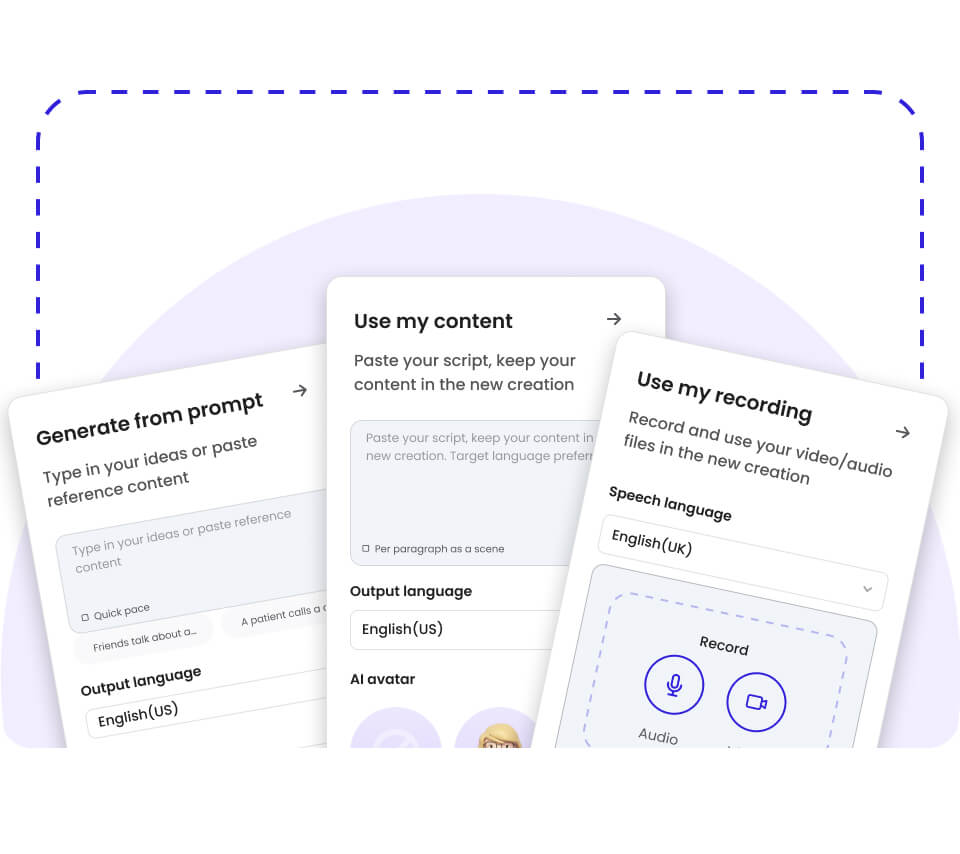
Illustration showing video creation inputs from a prompt, existing content, or a recording

The illustrated workflow depicts three starting points: a prompt, existing content, and a recording.

100,000,000+

videos created

5,000,000+

creators

50+

countries covered

10+

languages supported on the homepage

How to Choose the Right Explainer Video Script Example

Start with the communication job, not the visual style. A useful reference is one that has a similar audience, subject, and amount of information to the video you need to make.

  • If your topic is one simple “why” question → choose the oil-and-water example for a short cause-and-effect format.
  • If you need to explain a health or safety issue → choose the bacterial-resistance example for its story and practical advice.
  • If your subject involves roles in a process → choose the DDP example to study how responsibilities are separated.
  • If you are telling a compact history story → choose the Wright brothers example for a dated event and specific outcome.
  • If your subject includes specialist concepts and specifications → choose the STM32U3 example as a longer technical reference.
  • If you are writing for a particular language or audience → select a source example that matches that audience, then adapt terminology and context rather than assuming a direct translation will fit.

FAQs

What is an explainer video script? +

An explainer video script is a written plan for explaining a topic through narration and visuals. It identifies what the audience needs to understand and arranges the information into a clear sequence. It may also guide scene choices, examples, pacing, and the closing takeaway.

How do I write an explainer video script? +

Start by naming the audience and the one main idea the video should communicate. Outline the question or context, the explanation in a logical order, and a concrete example or application. Finish with the key takeaway, then check that every scene supports the main point.

How long should an explainer video script be? +

There is no single runtime in this collection: the examples range from 22 seconds to 273 seconds. The right length depends on how much information the viewer needs and how much context the topic requires. Use the shortest structure that still explains the subject accurately and clearly.

Can I use these examples as ready-made scripts? +

The collection provides public videos, durations, and summaries rather than full word-for-word scripts. Treat each item as a reference for topic framing, structure, and the kind of information included. Write original wording for your audience and verify facts that matter to your subject.

Can I make an explainer video from a script with Mootion? +

Mootion is described as a visual storytelling platform that accepts scripts and other inputs to create videos and animated scenes. Its stated workflow can include scenes, motion, synced audio, voiceovers, and pacing. Mootion is a paid product with no free plan, so review the pricing information before signing up.

Write the explanation first; plan the visuals around it

The strongest starting point is a focused question, a logical explanation, and a takeaway that suits the audience. Use the five examples above to compare storytelling approaches, then draft a version specific to your topic. When you are ready to explore video creation, review the product details and available paid plans.

Get started